Between trust and vulnerability
The role of the media in an era of hybrid threats
Whilst concerns about targeted sabotage and cyber-attacks are rising sharply in Germany, the media are playing a paradoxical dual role: on the one hand, they are regarded as a sector that is comparatively less at risk, yet at the same time they are the most important source of reliable information in times of crisis. A representative survey by the digital industry association Bitkom, conducted amongst 604 companies, paints a bleak picture of overall resilience, but also offers specific insights into the media and culture sector.

Published: 16 April 2026 | Photo / Video: AI-generated, Freepik
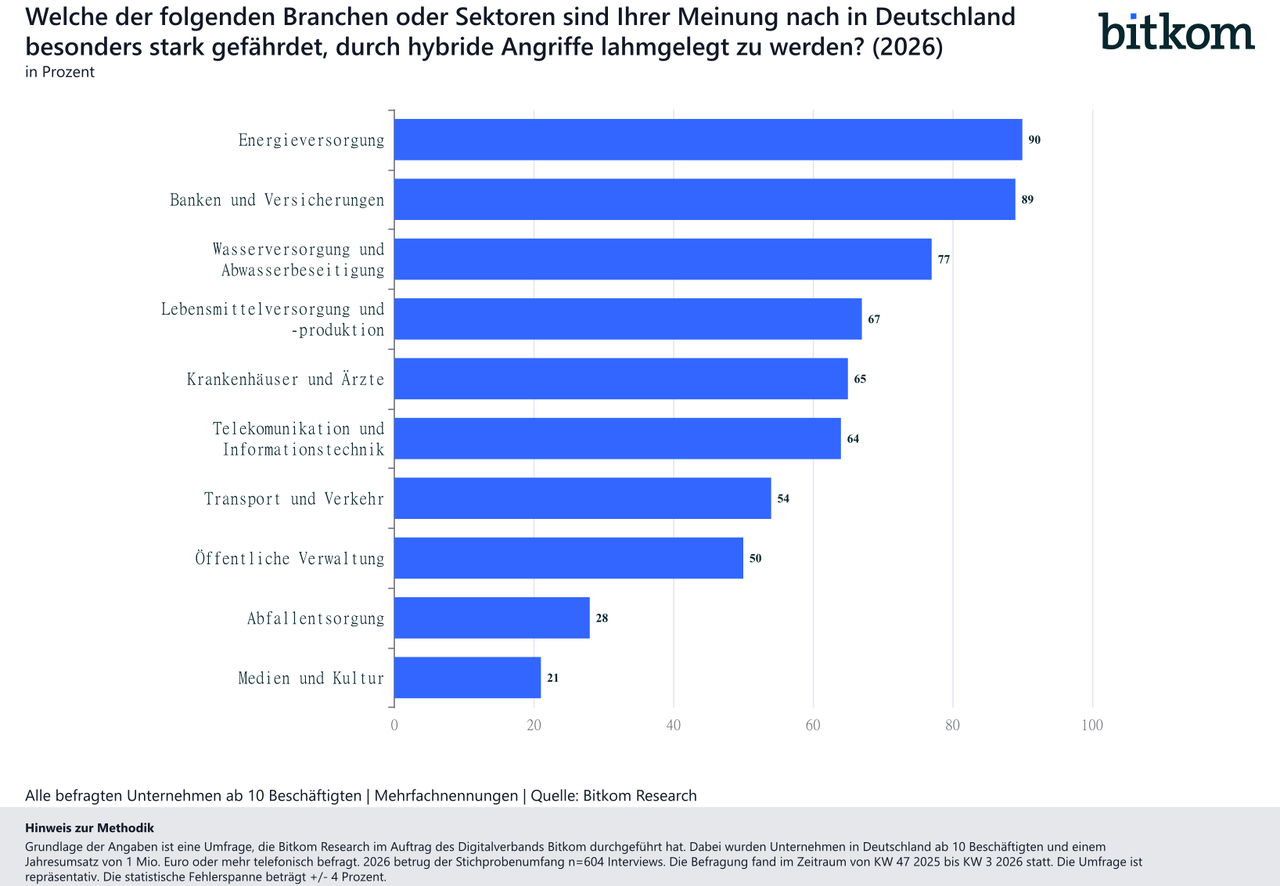
Compared with critical infrastructure sectors such as energy supply (90 per cent) or the financial sector (89 per cent), the media and culture sector is rated by the companies surveyed as being the least at risk. Only 21 per cent of organisations consider this sector to be at particularly high risk of being paralysed by hybrid attacks – the lowest figure across all sectors.
Nevertheless, the sector is essential to the functioning of society in an emergency. When it comes to the impact of disruptions, the picture is more nuanced:
A breakdown in the media landscape would have a major impact on the day-to-day running of 22 per cent of companies.
In a crisis, however, the media are accorded an enormous amount of trust.
The media as a rock in the storm?
When hybrid attacks – which, according to Bitkom President Dr Ralf Wintergerst, take place in a “grey area between war and peace” – threaten stability, the business community turns to the information providers.
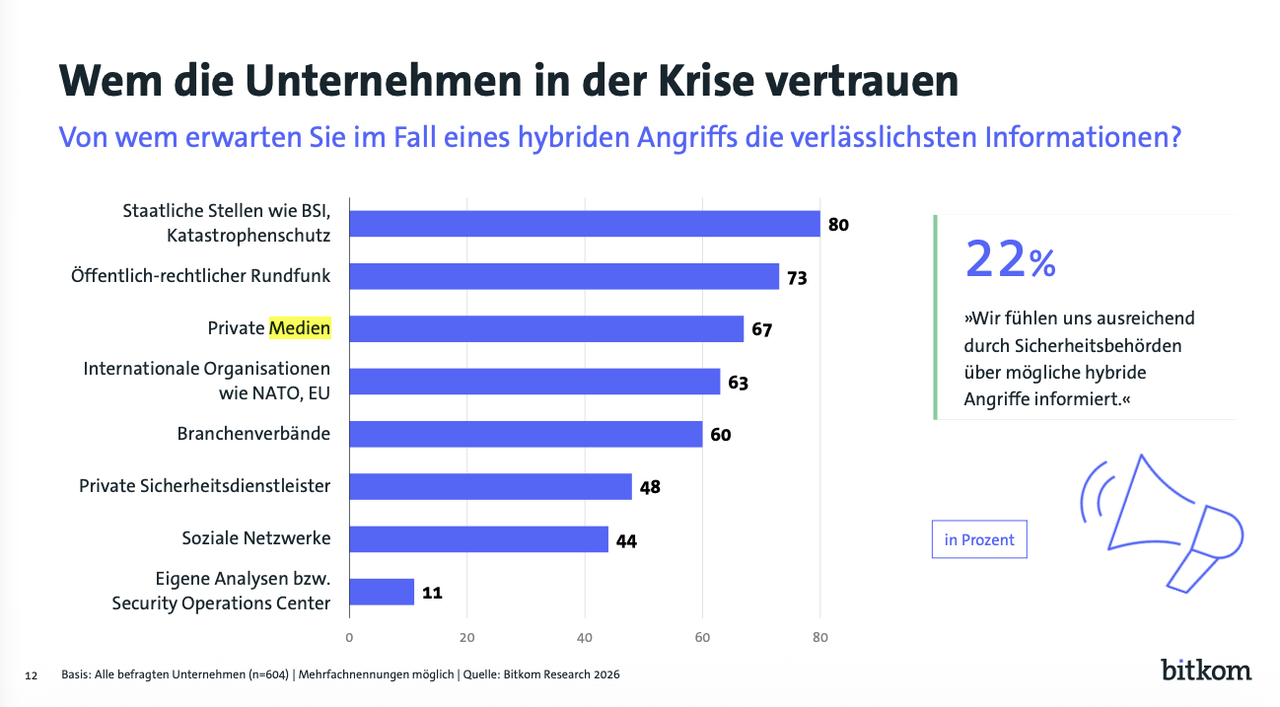
73 per cent of companies trust public service broadcasters to protect their information in the event of an attack.
67 per cent rely on coverage from private media outlets.
This means that media organisations rank higher on the trust scale than international organisations such as NATO or industry associations. They act as a critical link between government bodies and the general public.
The Achilles’ heel: the internet
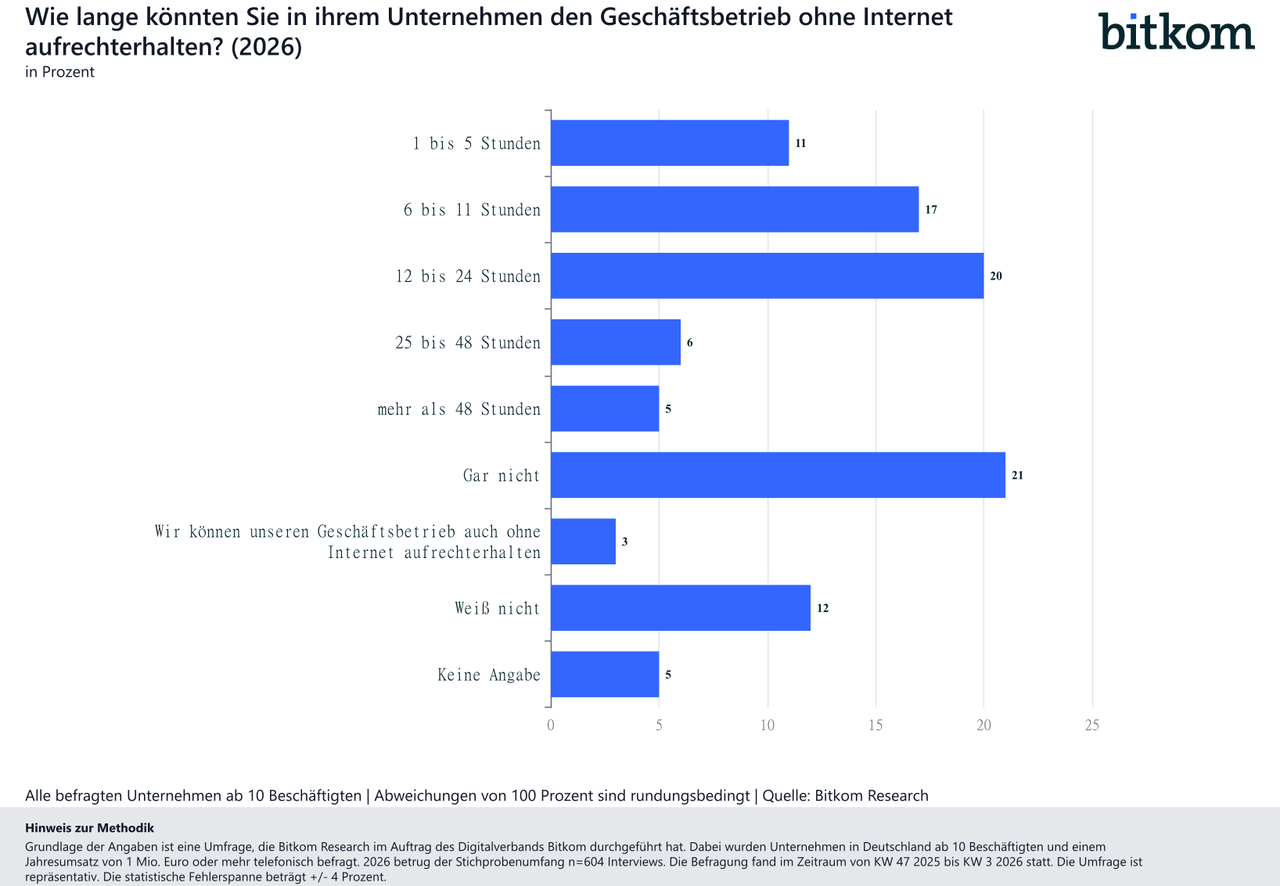
The greatest threat to all sectors, including the media, remains a widespread internet outage. The study shows that the German economy is extremely vulnerable in this regard: on average, companies can only keep their operations running for 20 hours without the internet.
21 per cent would have to stop working immediately.
Only 3 per cent of companies say they are able to operate on a long-term basis without the internet.
A call for resilience
Despite the central role played by information, only 12 per cent of companies overall consider themselves well prepared for hybrid attacks. Whilst protection against cyber-attacks and sabotage is a ‘top priority’ in 61 per cent of organisations, there is a significant need to catch up when it comes to implementing specific contingency plans.
Bitkom President Wintergerst is therefore calling for a massive increase in resilience. For the media, this means not only protecting their own infrastructure, but also ensuring that reporting continues even under the most adverse conditions – because without it, the economy lacks its most important compass in a crisis.
What measures are you planning to put in place within your organisation to ensure communication continues even in the event of a digital infrastructure failure?