How to get through a lean period
How to steer your project into the growth phase after Level 1. By Sebastian Esser
You’ve got to start somewhere. You probably – like me – started by turning your circle of friends and acquaintances into users. Family, people who follow you on social media, email lists that were just lying around in some folder for one reason or another. Some of these people found your new project exciting enough to start reading or listening, and they spread the word. More users joined. It was going quite well.
And then: a standstill. A few new sign-ups trickle in every week, whilst a few drop out. The growth curve is as flat as the Gobi Desert. What follows is a lean period.
Is that it? Will you ever reach more people than the 750 loyal followers who tirelessly follow you? Don’t lose heart.
Why you’re not growing any further
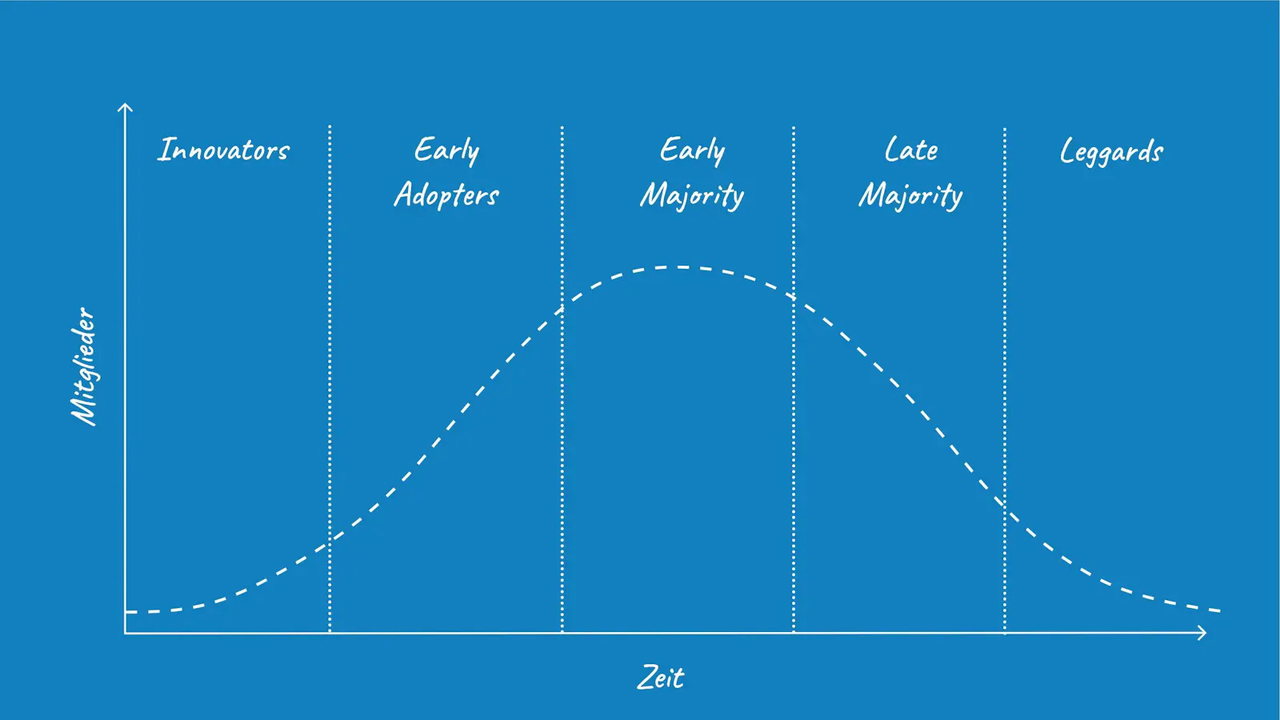
According to marketing consultant Geoffrey Moore (‘Crossing the Chasm’, 1991), new companies often run into problems after their initial growth phase. This is because, once they stop selling to ‘enthusiasts’ and ‘visionaries’, they start selling to ‘pragmatists’. Enthusiasts are willing to overlook quirks. Pragmatists simply want a problem solved. What contributed to early growth is of no use to the new target group. A lean period ensues (or ‘chasm’, chasm) – between the initial growth phase and the next phase.
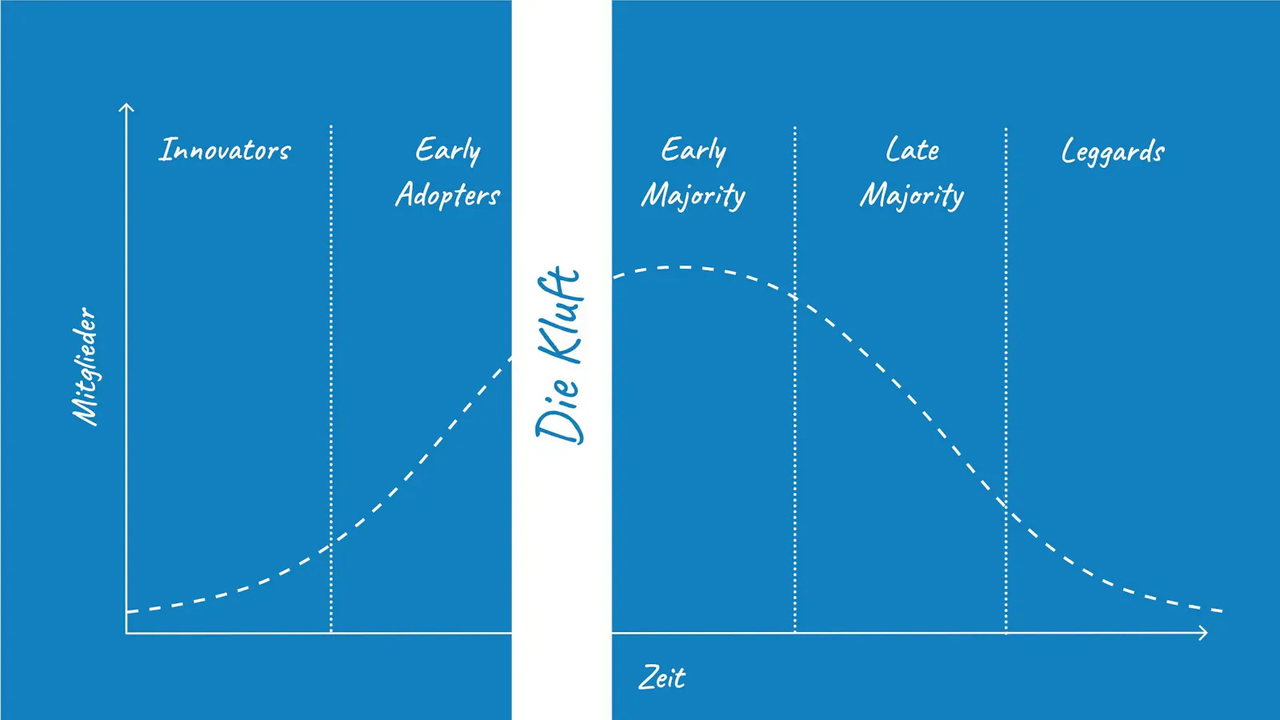
Why aren’t you growing any more?
You know your first users personally. Best friends, family, followers – let’s call them BFFF. The reason they find your topics interesting is that you’re similar. Similar jobs, similar cities, similar ages. They know you; they like you. Your implicit value proposition is: ‘I’ll tell you things that interest both of us.’ If these people pay you money, it’s to support you – not because you’re providing them with something of real monetary value. That’s perfectly fine. It’s just that this market is tiny.
The problem is that BFFF isn’t a good test of the wider market. Your circle of friends isn’t a market. Your lean spell is about to begin.
How to get through a lean period
For a start, that’s a success: Level 1 is complete. BFFF has made a strong impression, built up its reach and realised its potential. Now comes Level 2: the growth phase. Now comes a larger market with even greater potential.
Think of the growth phase as a new product in a new market. Name, value proposition, pricing, reach strategy – everything is up for debate. A clean slate.
What new target audiences are likely to be missing is clarity. What difference will you make for users who are hearing about your publication for the first time today?
Send a short survey to all users you don’t know personally and who’ve been with us for a while. Ask them: What do you hope to gain from this publication? What change do you hope to achieve through it? Would you be willing to pay for it? How did you come across me? And: Would it be OK if I gave you a ring sometime?
20 replies will do. Look through these replies for people who might belong to the new target audience. You’ll recognise them by the following: you don’t know them. They’ve been around for a while. They’ve clearly articulated a problem. In principle, they’d be willing to pay.
Call a few of these users. Listen to them. What exactly do they want from you? Don’t put words in their mouths. Ask questions, but allow for pauses now and then. You’re looking for things you haven’t thought of yourself.
Once you’ve had three such conversations, a direction almost always becomes clear. Your job now is to focus: decide on a core promise and leave everything else out. What change in my life are you promising me? For whom, exactly? Sum it up in one sentence – three at most.
Send this new pitch again to the survey respondents you’ve identified as part of the new target audience. Ask for suggestions on how to improve it. Then make your decision.
Ideally, you’ll end up doing a lot of things differently. You know exactly what your promise is, and you leave everything else out. You communicate this promise clearly and frequently. You tailor your landing page, your emails – everything. It sounds like a lot of work, but I reckon you can sort it all out in an hour.
Give your work away
Now there’s just the second part left: how do you reach this new target audience with your new value proposition?
Seek out partnerships with people or organisations that are already in contact with your new target audience. Share your work with other newsletters and swap audiences. Ask your community to recommend you, and offer a reward to those who do so successfully. Ask readers if they’d like to become brand ambassadors and record a short testimonial. And create a lead magnet – a PDF, a video course or an e-book containing something you’d normally have to pay for – in exchange for an email address.
However, all these tactics are simply designed to support growth that arises organically – because a clearly defined target audience has a need that your solution fulfils.
It’ll take a while. We’re effectively starting all over again. But after a while, you should start to see the first signs of progress. And then you’ll have made it: the rough patch will be behind you.

Sebastian Esser is CEO of the membership platform Steady and editor of the member-funded magazine Krautreporter. Every Monday, he publishes his free newsletter, ‘Blaupause’, aimed at media start-ups, community operators and subscription providers (steady.de/sebastian).