How to create visions of the future
A ten-step guide by Anne M. Schüller
Photo: AI-generated, Freepik
What is currently sorely lacking are inspiring narratives of progress, striking visions of the future and motivating narratives about what lies ahead. That is why everything is floundering. The idea of a future worth striving for brings people together and motivates them to move in the right direction. Ten steps will lead us to our goal.
Anyone who wants to reach the future must have a clear picture of who they want to be in the future and what they will be doing there. Yet many companies suffer from cognitive short-sightedness when it comes to the future. After all, yesterday’s success tells us absolutely nothing about tomorrow’s success. The search for future growth areas must therefore begin at a very early stage. A vision for the future provides sound insights into developments on the horizon relating to the company and its business objectives.
On this basis, those in charge develop a keen sense of opportunities and risks, can make adjustments in good time, set a course with care, and are less frequently required to react to unexpected events. When decisions need to be made, they can draw on ‘pre-planned strategies’ and act more quickly and prudently. To get this process underway, I recommend the following 10-step programme:
10 steps to visions of the future
Step 1: Set up a Future Task Force
First of all, put together a Future Taskforce. This should be cross-functional, cross-hierarchical, gender-diverse, intercultural and comprise both experienced and young people. Ideally, you should involve an external expert at an early stage – such as a futurologist – who can discuss the key trends with the participants and help develop the relevant scenarios. Experience shows that internal participants may downplay or dismiss undesirable aspects, whilst portraying the desirable ones in an overly optimistic light.
Step 2: Formulate the initial question
Right at the start, an initial question is formulated, something along the lines of: “What will our working and living environments be like in the year X?” It is even more effective to make this more specific. For example, for a property developer, this might sound like this: “What will the living situation look like in Berlin in 20 years’ time, taking into account digitalisation and climate issues, and what impacts will this have on property developers, property management companies and other players in the property market?”
Step 3: Determine the target time scale
The timeframe to be chosen varies depending on the sector. For example, the fast-moving digital industry operates on entirely different time cycles to urban development, which has a very long-term focus. As a general rule, a time horizon of five to ten years is appropriate.
Step 4: Research the key trends
This step requires sufficient time and the necessary lead time. First, we look at the key trends. Long-term trends are particularly important here. In addition, industry-specific trends must be taken into account. How do you identify them? Renowned consultancy firms, leading futurologists and futurology institutes have used scientific methods and computer-aided simulations to develop scenarios for a wide range of industries, markets and life situations, some of which are available free of charge on their websites.
When it comes to technological developments, the Gartner Hype Cycle is of particular interest, as it illustrates, amongst other things, the maturity level of a given technology. Anyone with international ambitions will find what they’re looking for in Amy Webb’s work. She is one of the world’s leading futurists. Her free annual trend reports are downloaded millions of times. Supplementary online research, insights into other cutting-edge sectors, videos, podcasts and interviews with futurologists provide further depth to the analysis.
Step 5: Identify the forces driving change
To this end, we examine the key social, political and economic influences, as well as the potential driving forces that may have a long-term impact on a sector – and, in particular, on our own company – from outside. In the case of housing, these include demographics, housing demand, migration and out-migration, income levels, legal regulations, infrastructure, transport, office and commercial space, shopping behaviour, energy supply, water supply, green spaces, nature conservation, smart cities, security and much more.
Step 6: Develop possible scenarios
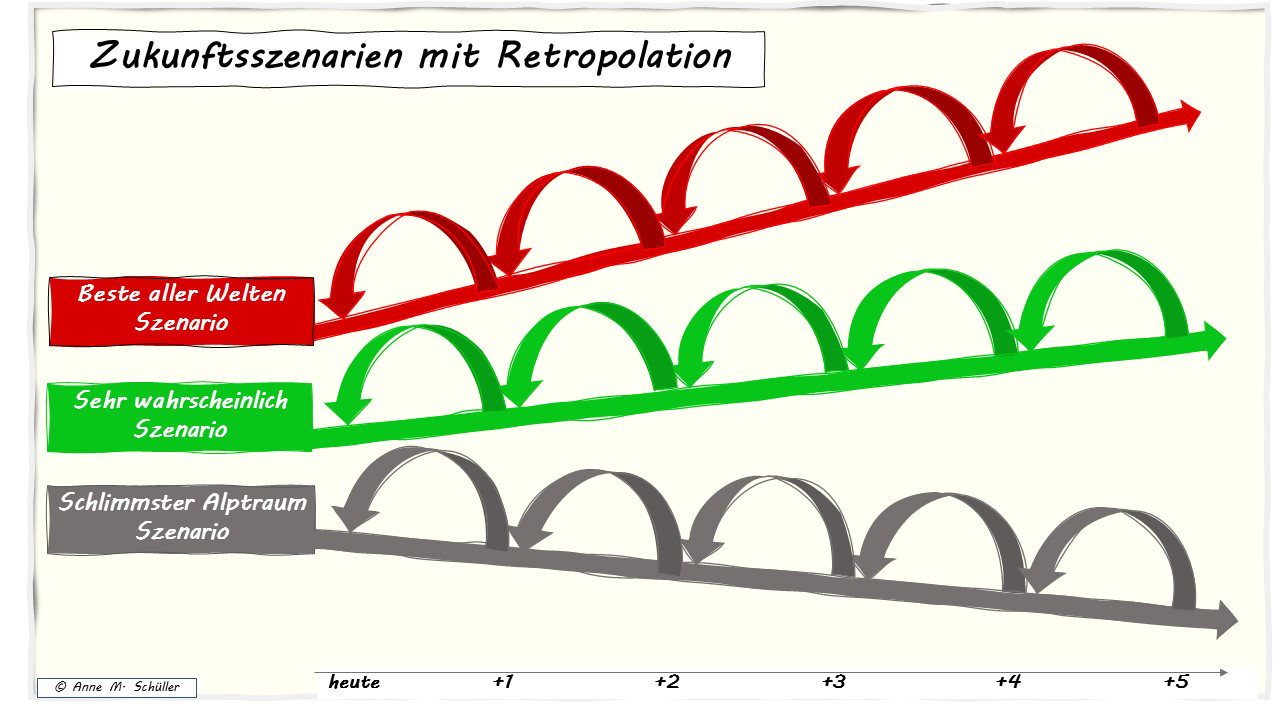
Now decide which scenarios you wish to examine in detail. I recommend drawing up three scenarios; these are usually as follows:
a best-of-all-worlds scenario,
a highly probable scenario,
a worst-case-scenario nightmare.
Set up a separate working group for each scenario. Important: When developing the scenarios, the focus is on possible courses of events, not what is feasible for a company. And yes, in doing so we must also consider nightmare scenarios in order to gain clarity on what kind of future we definitely do not want for ourselves.
Step 7: Design future personas
For each scenario, create a future persona who lives within that scenario. Personas are realistic, prototypical representatives of a group of people. In future management, a persona profile describes a person – albeit a fictional one – who is nonetheless representative of their group, along with their environment in the target year. It describes typical behaviours, characteristics, approaches and expectations.
Ask yourself questions such as these: In what kind of environment will the persona live in the year in question? How will they work? Where and how will they shop and consume? What trends will influence them? What are the dominant themes of their time? What is the social context in which they are embedded? What will inspire this persona and what will disappoint them? On this basis, develop a story that recounts a moment in this persona’s future life.
Step 8: Identify appropriate areas for action
In this step, choose which of the scenarios you wish to explore in more detail. Participants from the scenarios that were not selected will join the discussion to contribute fresh perspectives or warn of potential risks. You should then define the areas of action that will arise for your organisation going forward. Our property developer could, for example, focus on future concepts such as co-living, co-working, co-gardening and co-mobility.
Step 9: Defining the strategy for the future
Firstly, we need to consider the company’s vision for the future – in other words, the ideal position it wishes to occupy in the future under consideration. The future strategy is derived from this. We then define the intermediate steps required to achieve the targeted objectives. To avoid the pitfall of simply extrapolating the future from the past and present, we make use of retropolation, also known as backcasting or regnose.
The process involves working backwards in fixed time intervals from the future scenario described for the target year to determine what needs to be done by each specific point in time in order for the desired future to become a reality.
For example, in the case of a five-year period, the question is: “If we want to achieve a target scenario X in five years’ time, what measures must have been taken in four, three, two and one year’s time in order to get there?” Or, in the case of a nightmare scenario ten years from now: “What measures must have been taken in eight, six, four and two years’ time to ensure that this definitely does not happen to us?”
Step 10: Initiate implementation plans
Once the areas of action have been identified, the vision and strategy for the future defined, and the milestones resulting from the retroprojection established, the necessary implementation plans are drawn up. In this way, companies no longer stumble forward, driven by circumstances, but instead plan their future based on foresight and within a holistic context. I have explained in detail exactly how all this works in my new book, ‘Mastering the Future’.
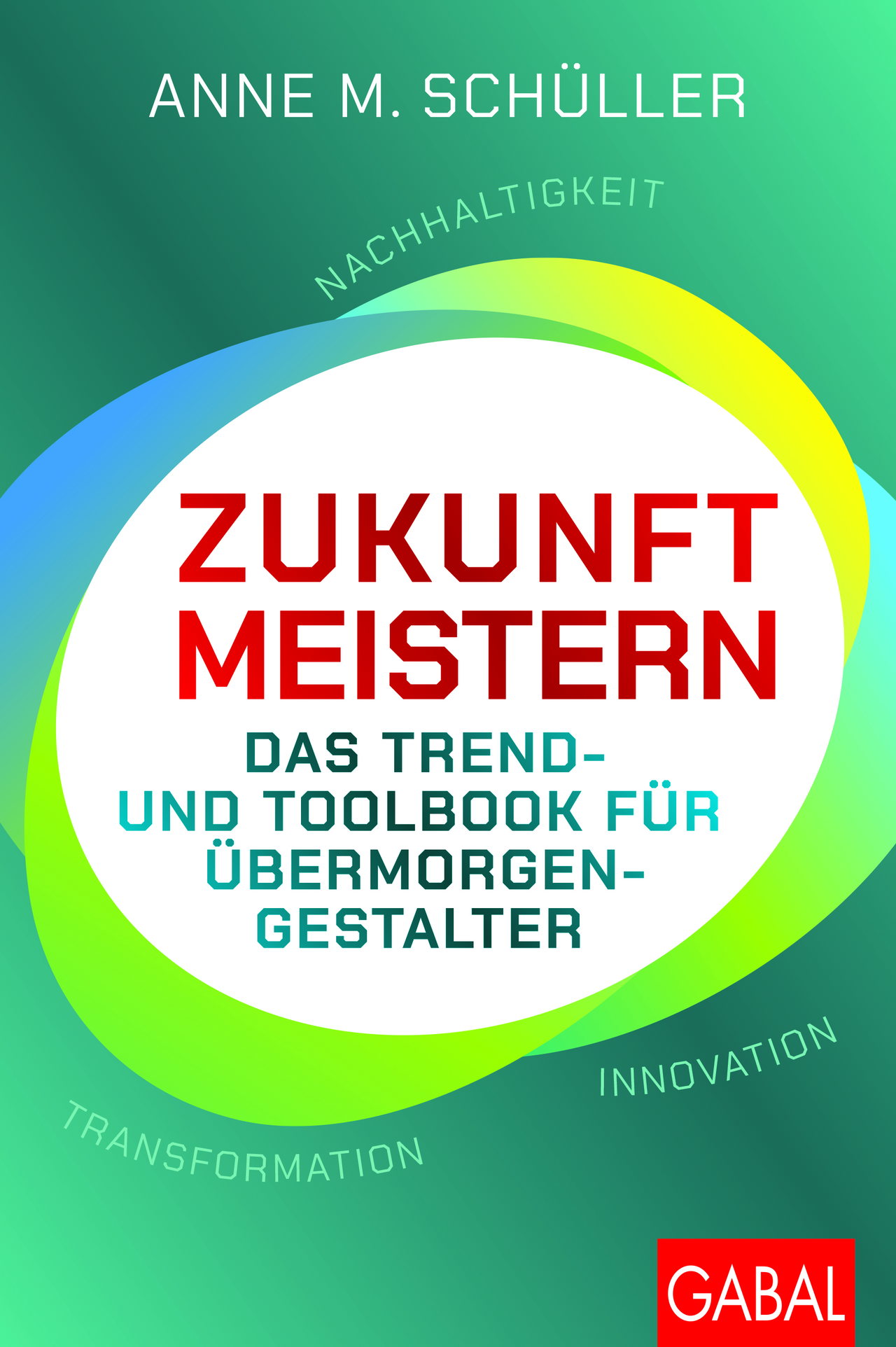
The book on the subject
Anne M. Schüller: Mastering the Future. The Trend and Toolbook for Shapers of the Day After Tomorrow
Gabal Verlag 2024, 232 pp., €29.90. ISBN: 978-3-96739-181-7

Anne M. Schüller is a management thinker, keynote speaker, multi-award-winning bestselling author and business coach. A graduate in business administration, she is regarded as a leading expert in narrative touchpoint management and sustainable corporate leadership. She delivers inspirational talks on these topics at conferences, specialist congresses and online events. In 2015, she was inducted into the German Speakers Association’s Hall of Fame in recognition of her life’s work. On the business network LinkedIn, she was named a Top Voice in 2017 and 2018. Xing named her a Top Writer in 2018 and a Top Mind in 2020. In 2024, she was named ‘Entrepreneur of the Future’ excellent. www.anneschueller.de