AI Leadership: The key skill for the future in the age of agency
Why the traditional role of the project manager is facing a fundamental transformation. By Doris Weßels
Published: 12 May 2026
Since the launch of ChatGPT in November 2022, the world of generative AI has transformed at a breathtaking pace. What began as an experiment with chatbots has long since developed into a global ‘GenAI battle’ between the technological superpowers. Yet we are already on the cusp of the next stage of evolution: the age of AI agent systems. In this article, Prof. Dr Doris Weßels explains why AI in project management should no longer be viewed merely as a reactive tool, but as an autonomously acting agent. She highlights why the traditional role of the project manager is facing a fundamental transformation – moving away from that of a purely operational ‘engineer’ towards that of a strategic ‘Agent Boss’. The central thesis: AI leadership is becoming a crucial skill for the future, essential for safeguarding human decision-making authority in a hybrid working world.
The rapid development of generative AI (Generative Artificial Intelligence – GenAI for short), which has led to far-reaching changes in both private and professional life worldwide, at least since the release of ChatGPT on 30 November 2022, is continuing at breakneck speed and feels like a daily GenAI battle being waged by the US and China, which currently dominate this development – driven by state intervention.
With AI agent systems, we will have entered a new era of AI by 2024 at the latest, in which AI tools have increasingly developed into independent actors and can no longer merely react, but can act autonomously within a framework defined by us. The starting point for my talk was the question of what implications this will have for project management and the human actors involved. In my presentation, after assessing the current state of the art, I examined the new division of roles between humans and machines in ‘human-AI interaction’, in order to analyse the future skills required of project managers on that basis. My concluding thesis was:
AI leadership is becoming a key future skill in the modern workplace – spanning multiple domains and not limited to project management.
The new era of AI agent systems
The development of generative AI continues (from the perspective of early 2026) at an unrelenting pace. From simple chatbots in 2022, through RAG systems in 2023, to the first AI agent systems in 2024 and on to the (multi-)AI agent systems available today, GenAI technology has continued to evolve.
In July 2024 (according to a leak published at the time), OpenAI outlined this evolutionary path in its five-stage roadmap towards Artificial General Intelligence (AGI): From simple chatbots in the first phase, through reasoning models in the second stage of development – which are capable of mimicking human thought and reasoning – the third stage of development leads to AI agent systems. It should be emphasised that the term ‘AI agent’ is currently being used rather loosely. However, there is broad consensus within the specialist community on these key characteristics: (partially) autonomous decision-making, multimodal capabilities for generating and processing various media types (text, images, audio, video, software code), step-by-step logical reasoning, a memory that retains connections across multiple conversations and tasks, and the ability to learn from experience and improve itself.
According to OpenAI, following this third phase of AI evolution, the fourth phase will see the emergence of ‘innovator’ systems, which will lead, in the final fifth phase, to AI systems capable of independently managing entire organisations.
These last two phases – and in particular the conceptually vague vision of Artificial General Intelligence (AGI), which is peppered with a great deal of ‘marketing prose’ – remain speculative and must, or rather should, be subjected to critical scrutiny.
Returning to the current phase: in the agentic phase, specific areas of application are emerging for project management which present a wide range of opportunities, but which are also fraught with risk due to the continuing danger of hallucinations from GenAI systems: AI agents can, for example, simulate team discussions, carry out automated risk analyses, produce documentation and take on routine tasks. Platforms such as Asana AI, Microsoft Copilot and Atlassian Intelligence are already demonstrating the potential of this technology.
The path from craftsman to manager
In my view, as AI systems become increasingly autonomous, the role of humans in the tool-supported world of work is undergoing a fundamental change. As a rough classification, we can distinguish between these three roles in human evolution in relation to the use of tools in the world of work:
In the past: people as craftspeople: working as in a workshop with traditional machines that managed without software and, in particular, without AI support.
Today: humans as machine operators: working with non-agent-based AI tools to provide support in the workplace.
Tomorrow: Humans as managers: delegating, orchestrating and leading AI agent systems.
The Microsoft Work Trend Index 2025 (Microsoft Corporation 2025) coins the apt term ‘Agent Boss’ for the third role in the age of agents: According to this Microsoft trend analysis, people will become leaders of hybrid teams comprising human members and AI agents, or – in later stages – teams consisting solely of AI agents; see Figure 1.
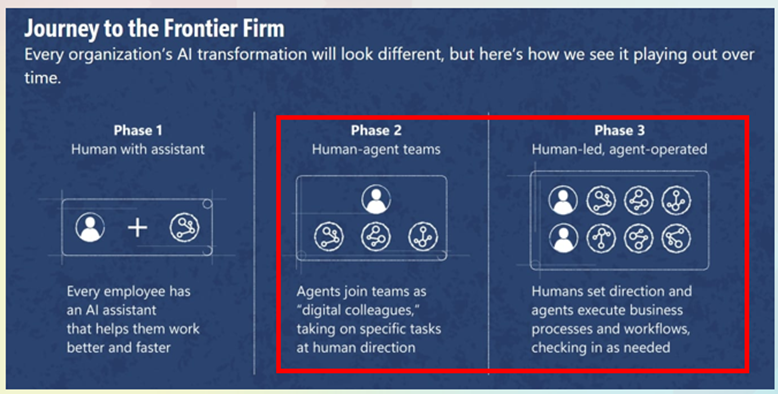
Figure 1: Microsoft and the Work Trend Index 2025 featuring ‘Frontier Firms’ (April 2025) and people in the new leadership role of ‘Agent Boss’, Source www.microsoft.com/en-us/worklab/work-trend-index/2025-the-year-the-frontier-firm-is-born
This raises a key question: what role do we play as human beings? Drawing on the metaphor of a flight, are we, as human beings, the pilots, co-pilots, or merely ‘passengers on board’? In my view, we need to be far more conscious of these questions. This also involves recognising this process of development in our own behaviour and clarifying the distribution of power more precisely in future. In my view, we humans must (of course!) see ourselves in a leadership role and take on this new and non-trivial challenge:
If we allow AI solutions to act as ‘dominators’, we will inevitably lose control. The more powerful – and therefore the more influential – AI systems become, the greater the danger. We must therefore not allow AI systems to assume this role of dominating us humans without proper scrutiny. The other two conceivable roles for AI – as a ‘facilitator’, which involves collaborative interaction between humans and machines on an equal footing, or as a mere executive tool in the role of ‘operator’ – are far less critical, but must also be precisely controlled by us humans. The aim must be to use AI systems responsibly, with great reflection and foresight, so that we can make the best possible use of the technology’s potential without jeopardising our human decision-making autonomy.
AI Leadership: Defining the key skill for the future
What human skills and competencies are associated with this objective? I use the term ‘AI Leadership’ to describe this, and have defined it as follows:
“AI leadership refers to the ability to manage the use of AI systems within a values-driven, transparent and reflective framework – without relinquishing decision-making authority to the technology being used. This definition adds a crucial dimension to established concepts such as digital literacy, data literacy and AI literacy: active leadership and management competence. It is no longer simply a matter of understanding or applying AI, but of strategically managing it whilst keeping ethical and legal aspects in mind.”
In short, AI leadership means exercising power over AI in a values-driven and responsible manner, combined with an ever-increasing level of competence in shaping and steering AI (Weßels, 2024).
The path from craftsman to manager
In my view, the path to AI leadership competence unfolds in three successive stages, as shown in Figure 2:
AI application skills – the practical use of AI tools in day-to-day work
AI literacy – strategic deployment for more complex tasks
AI Leadership Competence – the comprehensive management and control of AI systems
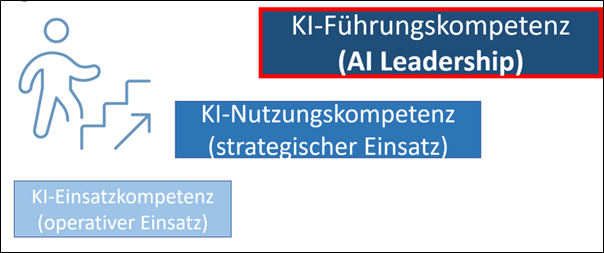
Figure 2: The path to AI leadership in the age of agency
The question of which skills are relevant in a working world increasingly shaped by AI brings us back to what sets us apart as human beings. These include, in particular, creativity that goes beyond learned patterns, genuine empathy, intuition, moral judgement and, last but not least, awareness. Accordingly, the World Economic Forum’s Future of Jobs Report 2025 (World Economic Forum 2025) highlights skills such as analytical thinking, resilience, leadership and creativity as the core skills of the future.
We need to be much more aware of our human strengths, because whilst AI systems may be better at recognising and reproducing patterns in vast amounts of data more quickly, it is our deeply human abilities that set us apart. These qualities will not become any less relevant in future project work; on the contrary, they will be more important than ever.
Conclusion: Reinterpreting the leadership role
The integration of AI agent systems into project management is no longer a vision of the future; it has become a reality by 2024 at the latest. For project managers, this development means that anyone who wishes to harness the potential of this technology whilst retaining control must develop the skills required for AI leadership.
This new competence must not be reduced to a technical skill in the narrow sense, but rather represents a comprehensive approach: it combines technical understanding with ethical reflection, and strategic thinking with human judgement. The aim is to retain control – precisely because AI systems are increasingly acting like (partially) autonomous agents.
The question, therefore, is not whether we will work alongside AI agents, but how – and whether – we will assume and develop our new leadership role quickly enough.
This article is based on my presentation, ‘AI and project management – from hype to practice’, given at the 34th IPMA World Congress 2025 in Berlin.
Reprint Courtesy of GPM – German Society for Project Management e. V.
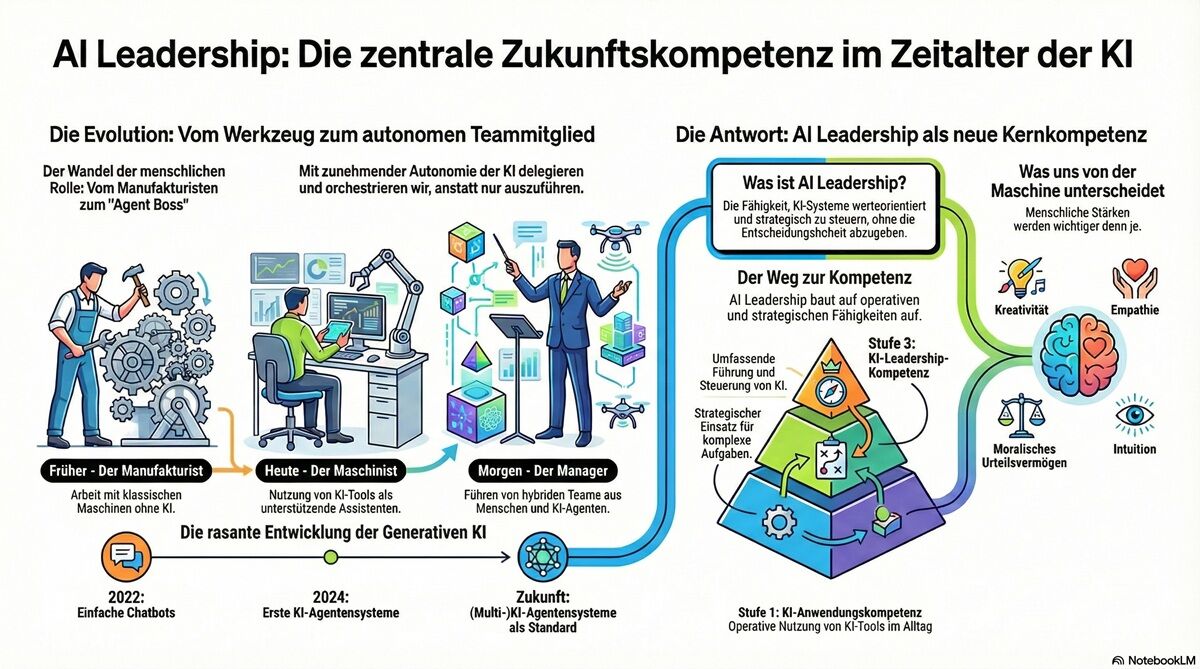
Figure 3: AI-generated summary of the article (NotebookLM infographic dated 9 January 2026)

Prof. Dr Doris Weßels is the scientific director at the Schleswig-Holstein AI Application Centre for the Generative AI Future Lab at the FuE-Zentrum HAW Kiel GmbH, and a co-founder and core team member of the “Virtual Centre of Excellence: Artificial Intelligence in Education, Science and the Workplace” (VK:KIWA).
Further reading:
Microsoft Corporation. (2025). 2025: The Year the Frontier Firm Is Born [Work Trend Index Annual Report]. (PDF)
Weßels, D. (2024). AI Leadership as the supreme discipline. changement, 06/2024, 10–11.
World Economic Forum. (2025). The Future of Jobs Report 2025. Further information